
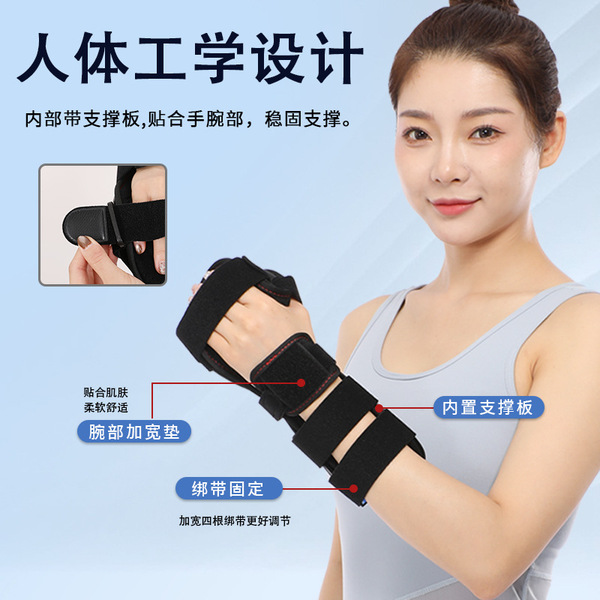

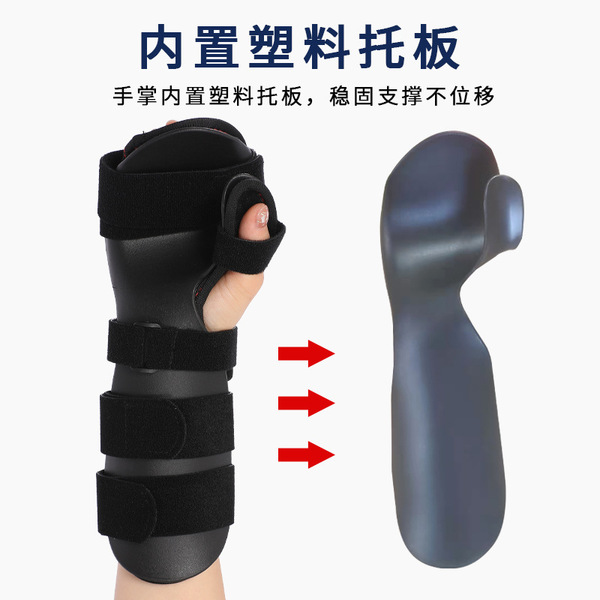
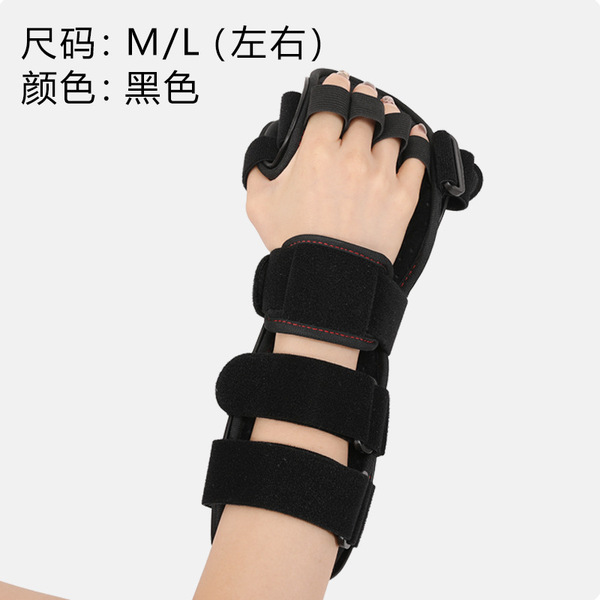
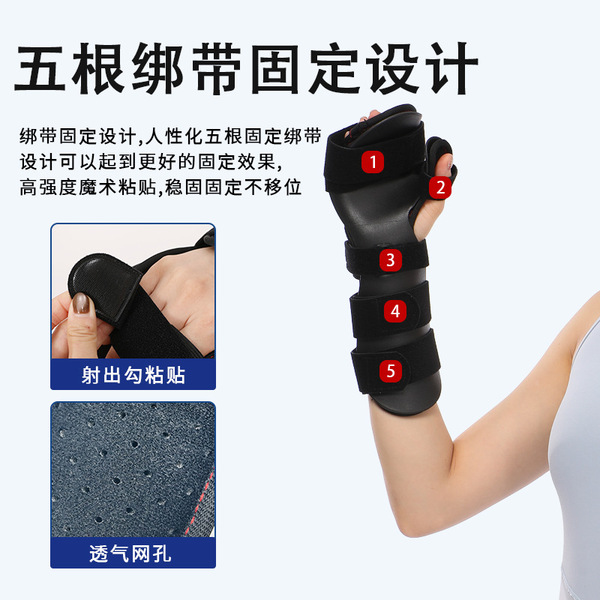
A wrist drop splint, also known as a radial nerve palsy splint or wrist cock-up splint, is a medical device used to stabilize a weak or flaccid wrist. It is specifically designed for individuals who cannot lift their hand upward due to nerve damage or muscle weakness.
Core Design Features.
- Neutral Positioning: The splint typically holds the wrist in a neutral or slightly extended position (often 20–30 degrees), which is the most functional angle for hand use.
- Stabilizing Support: It often includes a rigid aluminum or thermoplastic bracket along the underside or top to provide fixed support and prevent the wrist from “slouching”.
- Adjustable Straps: Multiple hook-and-loop (Velcro) straps—typically around the forearm, wrist, and hand—allow for a customizable, secure fit that can be applied with one hand.
- Finger Extension: Some specialized “dynamic” models include elastic bands or loops for individual fingers to help pull them back into an extended position.
Common Clinical Uses
- Radial Nerve Palsy: Often called “Saturday night palsy,” this occurs when the radial nerve is compressed, leading to an inability to lift the wrist.
- Stroke Recovery: Helps stroke survivors manage hand weakness and prevents permanent muscle shortening (contractures).
- Nerve Injuries & Trauma: Used following humerus fractures or direct nerve lacerations to protect the joint while the nerve regenerates.
- Overuse Conditions: Assists in managing symptoms of carpal tunnel syndrome, tendonitis, or severe arthritis by resting the joint.
Usage and Care
- Day vs. Night Wear: Doctors may recommend wearing the splint at night to prevent unconscious bending or during the day to assist with tasks like driving or typing.
- Skin Monitoring: It is important to check for red marks or numbness. The skin should be clean and dry before applying the splint.
- Muscle Maintenance: Prolonged, continuous use can lead to joint stiffness; users are generally encouraged to perform gentle range-of-motion exercises several times a day as directed by a therapist.
Medical Disclaimer: This information is for general educational purposes and is not a substitute for professional medical advice. Always consult a healthcare professional for a personalized treatment plan and make sure to double-check the physical label or manufacturer’s instructions for specific safety guidelines.



Reviews
There are no reviews yet.