
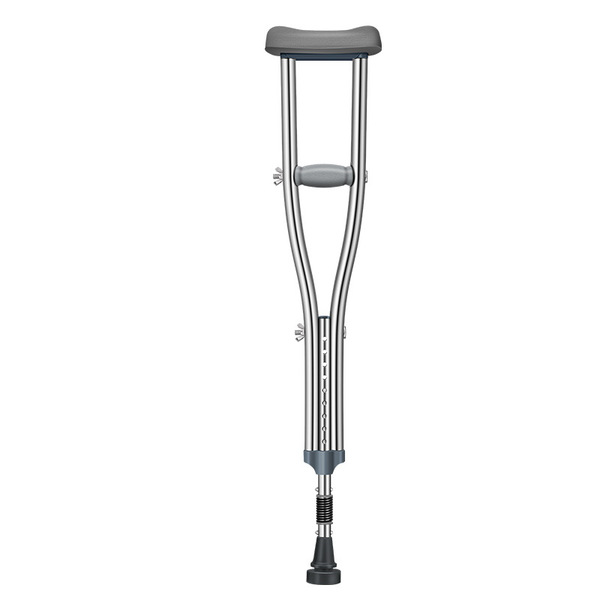
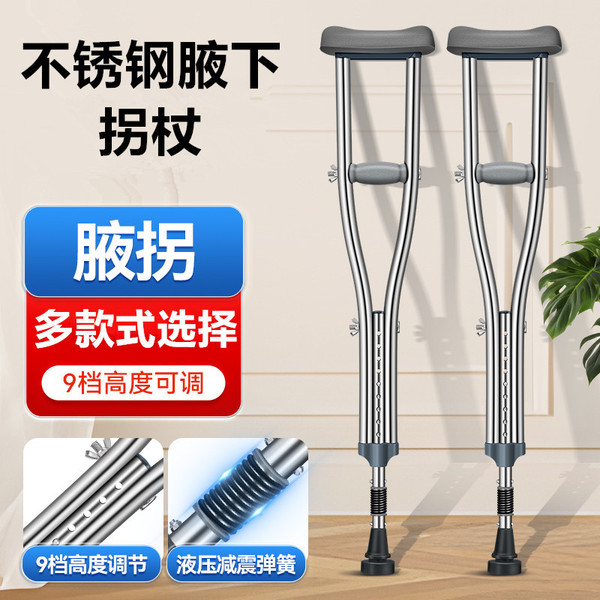
Axillary crutches, commonly known as underarm crutches, are the most standard mobility aids designed to transfer weight from the legs to the upper body. They are primarily intended for short-term use (typically 1–3 months) during recovery from lower limb injuries, surgery, or fractures.
Key Components and Design
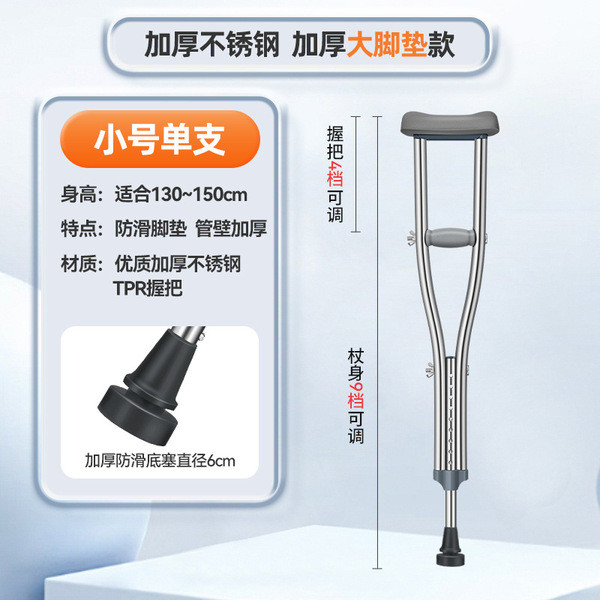
The crutch features a lightweight frame, usually made of aluminum or wood, consisting of several integrated parts:
- Axillary Pad: A cushioned bar at the top that rests against the side of the chest wall.
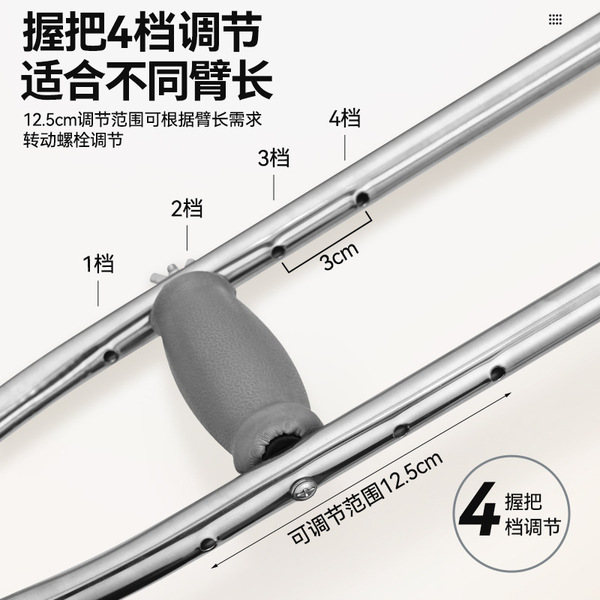
- Handpiece: An adjustable grip in the middle of the frame where most of the user’s weight should be borne.
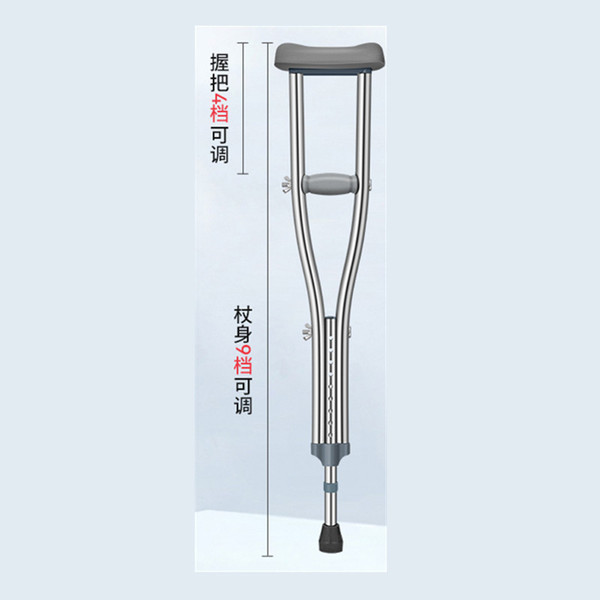
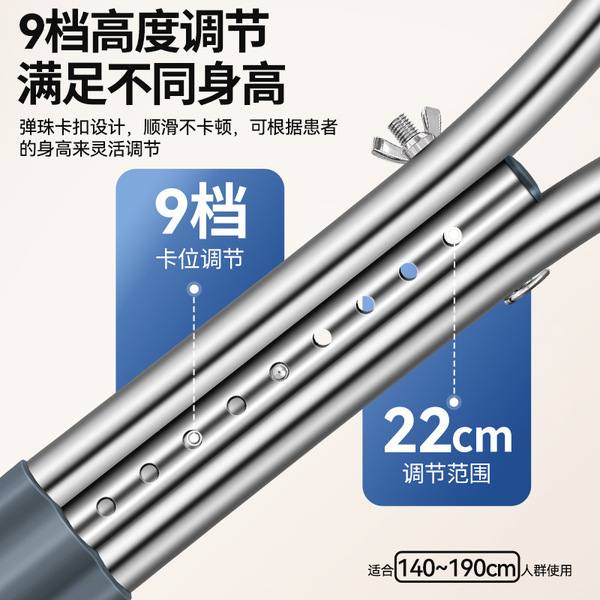
- Central Strut: The main shaft, which is height-adjustable to accommodate different user sizes.
- Rubber Ferrule: A non-slip, durable tip at the base to provide traction and stability on various surfaces
Proper Fitting and Adjustment
Correct adjustment is critical to prevent nerve damage or discomfort:
- Height: When standing straight, there should be a 2-3 finger width (about 1–2 inches) gap between the axilla (armpit) and the top pad.
- Handgrips: These should be level with the wrist crease when arms are hanging naturally at the sides.
- Elbow Angle: Holding the handgrips should result in a slight bend of approximately 15 to 30 degrees in the elbows.
Safe Usage Protocol
Users must support their weight through their hands, not their armpits, to avoid “crutch palsy” or compression of the axillary nerve and artery.
- Walking: Move both crutches forward together, then swing the uninjured leg forward to land between them while keeping the injured leg off the ground.
- Stairs: Lead with the strong leg when going up and the crutches and injured leg when going down.
- Sitting/Standing: Hold both crutches in one hand (on the uninjured side) and use the other hand to steady yourself on the chair.
Medical Disclaimer: This information is for general educational purposes and is not a substitute for professional medical advice. Improper use can lead to injury; please consult a physical therapist for personalized fitting and gait training
Reviews
There are no reviews yet.